

Ever felt like a tiny whirlwind just took over your living room, leaving you wondering why “time-outs” feel like a tug-of-war? It is a common hurdle for every parent. We often see behavior as a problem to fix, but seasoned experts see it as a message to decode. Understanding this shift changes everything for your child’s growth.
How do experts turn a meltdown into a teaching moment?
When you choose licensed daycare providers in Evans, you aren’t just getting a babysitter; you are gaining a partner in child psychology. These experts know that big feelings often come from a small child’s inability to find the right words. Instead of raising their voices, they use a technique called “emotional coaching.” This means they sit at the child’s eye level and help them name what they feel.
- Gentle Redirection: This isn’t about saying “no” constantly. It is about moving a child toward a better choice. If a child is throwing a block, a trained provider might say, “Blocks are for building; let’s find a soft ball to toss instead.”
- Co-Regulation: Kids don’t know how to calm down on their own yet. Caregivers “lend” their calm to the child. By staying relaxed, the provider helps the child’s nervous system settle. It’s like being the anchor in a stormy sea.
- Natural Consequences: Instead of arbitrary punishments, children learn through cause and effect. If they spill juice while playing roughly, they help wipe it up. This builds a sense of responsibility rather than a sense of shame or fear.
But what happens when the usual “gentle” tricks don’t work during a busy afternoon of play?
Why is learning through play the secret sauce for behavior?
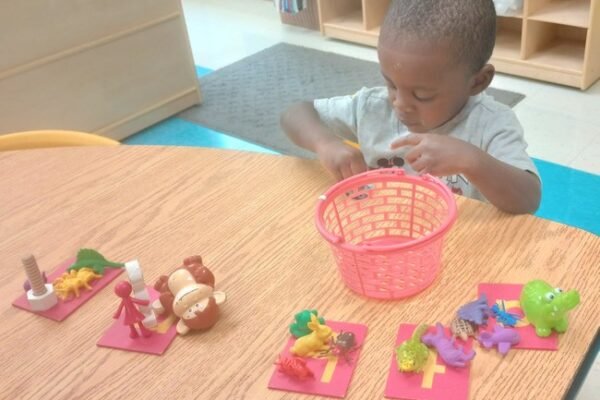
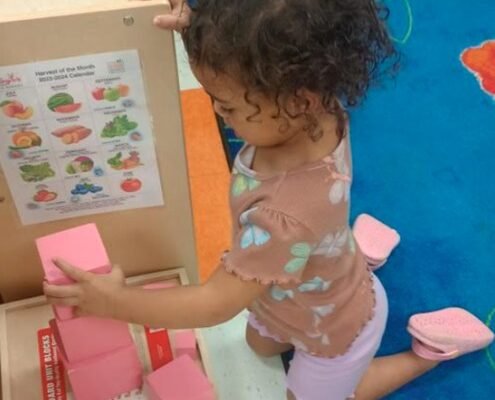
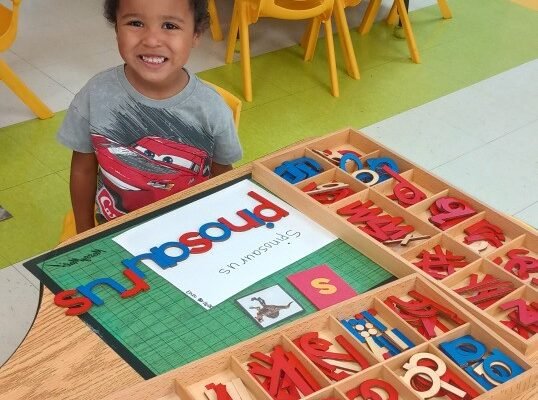
Active movement and hands-on discovery are the best ways to keep a child engaged and out of trouble. In a high-quality daycare in Evans, the environment is designed to prevent friction before it starts. When children are busy exploring sensory bins or building forts, they don’t have time to feel frustrated or bored. Boredom is often the root of most “acting out” at home.
- Predictable Rhythms: Children crave knowing what comes next. A steady schedule from 6 AM to 6 PM provides a safety net. When a child knows that snack time follows storytime, they feel secure. This security naturally reduces anxiety-driven outbursts and helps them transition between tasks smoothly.
- Social Modeling: Kids are like little sponges. They watch how their teachers interact with other adults. When they see a caregiver use “please” and “thank you” or resolve a conflict with a smile, they copy it. It is a “monkey see, monkey do” approach that works better than any lecture.
You might wonder if this soft approach actually prepares them for the real world or just spoils them.
The Science of Emotional Security
Research shows that children who feel emotionally safe are more likely to take risks in their learning. This is where Discovery Zone Kids makes it a point to match all the standards that are expected of it. By focusing on the “why” behind the behavior, caregivers build a bridge of trust. This trust is the foundation for curiosity and a lifelong love for learning.
When a child knows they won’t be shamed for a mistake, they try harder next time. Expert caregivers use “positive reinforcement” to catch kids being good. Instead of waiting for a rule to break, they praise the effort of sharing a toy. This flips the script on discipline. It makes the child want to cooperate because it feels good to succeed.
Professional licensed daycare providers in Evans use these strategies to ensure your child feels heard and valued. This leads to fewer power struggles and more “aha!” moments during playtime. It turns the daycare center into a laboratory for social skills. Your child learns to negotiate, empathize, and lead—all before they even hit kindergarten.
Teaching a child how to behave is a journey, not a sprint. With the right support and a playful environment, your child can blossom into a confident, kind, and curious learner. If you are ready to see the difference that expert, heart-centered care can make for your family, reach out to us today.
FAQs
- What is the difference between discipline and punishment?
Punishment focuses on making a child suffer for a mistake to “teach a lesson.” Discipline, especially in a professional setting, focuses on teaching the child the correct skill for the next time, focusing on growth and long-term self-control.
- How does redirection work in a group setting?
Caregivers watch for “trigger” moments. Before a conflict escalates, they guide the child’s attention toward a new, engaging activity. This prevents the meltdown entirely by swapping a negative impulse for a positive, hands-on learning task.
- Is emotional coaching too “soft” for high-energy kids?
Not at all! It is actually a very structured way to build brain pathways. By naming emotions, high-energy kids learn to recognize their own physical cues. This helps them manage their energy levels and stay focused on play.
- How do routines help with behavior at daycare?
Routines act like a roadmap for a child’s day. When a child knows the “rules of the road,” they feel in control. This reduces the fear of the unknown, which is a major cause of irritability and non-compliance.
- Why should I trust a licensed provider with behavior?
Licensed daycare providers in Evans undergo specific training in child development. They understand age-appropriate milestones. This means they won’t expect a two-year-old to share perfectly, but they will have the tools to help them practice that skill safely.
Get In Touch
For more information or to schedule a tour, get in touch with Discovery Zone Kids today!
Phone: 706-496-2489
Email: discoveryzonekids@gmail.com

 Recent Post