
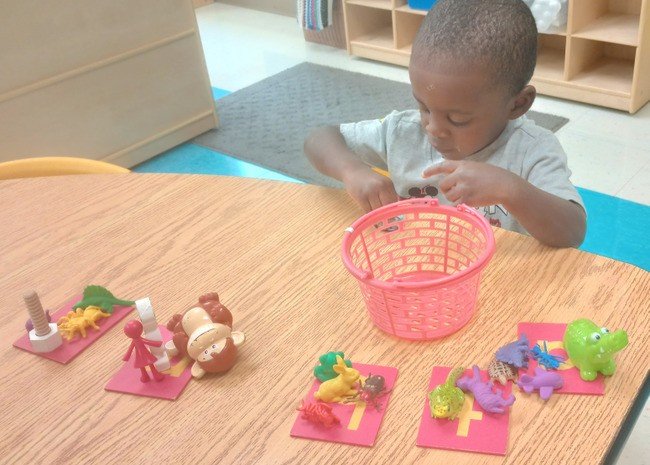
Most parents feel a nagging tug of worry when dropping their child off for the day. You wonder if they are just “passing time” or actually growing. It is a common struggle to find a balance between a safe space and a stimulating one. Choosing a quality preschool near Grovetown Georgia ensures your child’s brain isn’t just waiting—it’s wired for success.
How does your child’s brain build its foundation?
Between birth and age five, the human brain performs a spectacular feat of engineering. It creates millions of neural connections every single second. This isn’t just about learning ABCs; it is about “synaptic pruning.” Think of it like a gardener trimming a hedge to make it grow stronger. If those “learning branches” aren’t used, they might disappear.
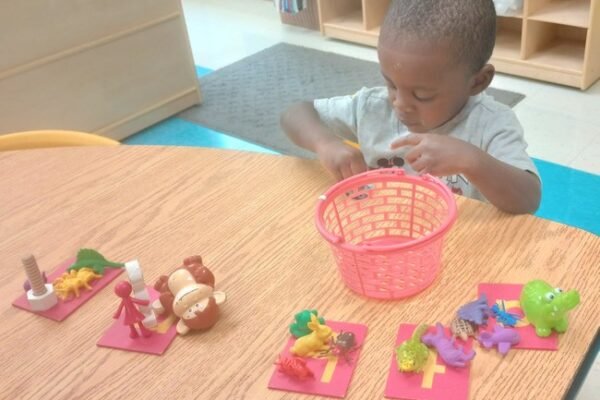
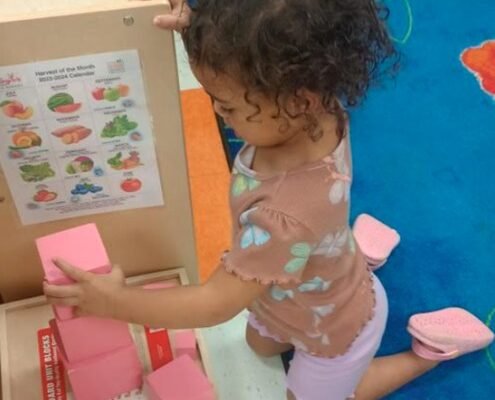
Preschool acts as the master gardener here. In a structured setting, children engage in activities that force the brain to solve problems. When a toddler figures out how to balance a wooden block on a shaky tower, they are actually practicing physics. This hands-on exploration turns tiny sparks of curiosity into permanent mental pathways. But what happens if a child misses this window of rapid growth?
Why is structured play more than just “fun”?
Many people think play is what kids do when they aren’t learning. In reality, play is the most intense form of research a human can do. At a high-end Grovetown GA daycare, play is intentional. It is designed to challenge the “Executive Function” of the brain. This is the command center that manages focus, memory, and self-control.
- Social Negotiation: When children share toys, they learn to regulate emotions and predict others’ reactions.
- Sensory Integration: Digging in sand or pouring water helps the brain process physical information accurately.
- Iterative Logic: Trying a puzzle over and over teaches the brain that “failure” is just a data point.
- Role Play: Acting out stories builds empathy and complex narrative thinking.
Can language immersion change how a child thinks?
Language is the primary tool for thought. In an early learning environment, children aren’t just hearing words; they are bathing in them. A rich vocabulary allows a child to categorize the world. Instead of just seeing a “dog,” they see a “Golden Retriever.” This precision in language leads to precision in thinking.
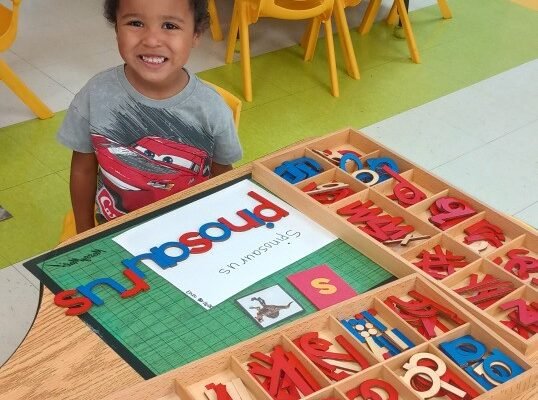
Early literacy doesn’t mean forcing a four-year-old to read a novel. It means “print awareness.” It’s about noticing that squiggles on a page represent real ideas. This realization is a massive cognitive leap. It shifts a child from being a passive observer to an active decoder of their environment. Discovery Zone Kids makes it a point to match all the standards that are expected of it by creating these word-rich environments daily.
What role does emotional security play in IQ?
You might think logic and emotion are separate, but they are neighbors in the brain. A child who feels scared or lonely cannot learn. Their brain stays in “survival mode.” A supportive preschool provides a “secure base.” When a child knows their teacher cares, their brain relaxes and opens up for complex learning.
This sense of safety allows kids to take risks. A child who feels secure will try to climb the taller slide or use a new word. These small risks are the building blocks of confidence. Without this emotional safety net, the brightest child might stall in their development. So, how do we ensure every child feels this spark of bravery?
Does early education predict future adult success?
The data is clear: children who attend quality programs show higher cognitive flexibility later in life. They handle stress better. They solve problems faster. This isn’t magic; it’s biology. By giving the brain the right “nutrients” (play, talk, and love) before age five, you set the thermostat for their entire life.
From 6 AM to 6 PM, your child’s day can be a series of breakthroughs. Whether it’s a military family needing stability or a local professional seeking the best start, the goal remains the same. We want to turn “What is this?” into “I can do this!” The journey of a thousand miles truly does begin in a sandbox.
FAQs
- How does preschool improve problem-solving?
Preschool places children in “low-stakes” challenges. Whether building a fort or resolving a playground dispute, kids must use logic and trial-and-error. These activities strengthen the prefrontal cortex, the area responsible for making complex decisions.
- Is my child too young for “academic” learning?
True early education isn’t about desks and drills. It’s about hands-on discovery. We use toys and art to teach math and literacy. This keeps the brain engaged without causing the stress that comes from rigid testing.
- What is “Executive Function” in toddlers?
It is the brain’s ability to manage information and stay on task. Preschool helps develop this through routines and games that require waiting your turn. This skill is a better predictor of success than an IQ score.
- How does social interaction help the brain?
When kids interact, their brains must process verbal and non-verbal cues simultaneously. This “social workout” builds neural pathways for empathy and communication. It teaches them to see the world through someone else’s eyes.
- Why choose a play-based curriculum?
Play is the natural language of childhood. It reduces cortisol (stress) and increases dopamine (reward). This chemical balance makes the brain more “plastic,” meaning it is more capable of absorbing and retaining new information.
Get In Touch
For more information or to schedule a tour, get in touch with Discovery Zone Kids today!
Phone: 706-496-2489
Email: discoveryzonekids@gmail.com

 Recent Post